















Quick Answer
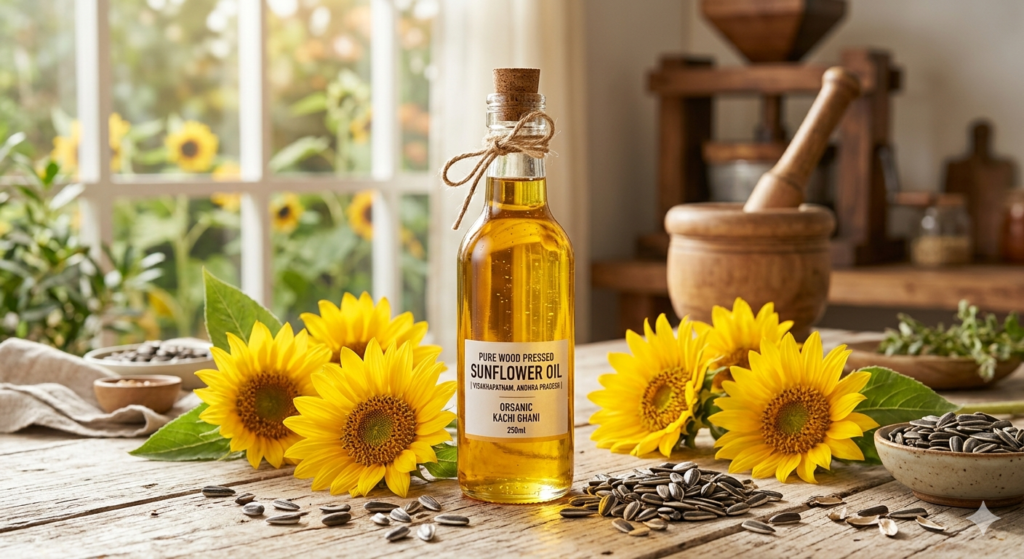
Wood pressed sunflower oil is extracted from raw sunflower seeds (Helianthus annuus) using a traditional wooden cold-press or chekku at temperatures below 45°C — with no chemical solvents, bleaching agents, or deodorising treatment. Unlike the pale, flavourless refined sunflower oil sold in most supermarkets, wood pressed sunflower oil retains its natural Vitamin E (tocopherols), phytosterols, polyphenols, and a beautifully light golden colour with a delicate, fresh nutty aroma. It is one of the richest natural sources of Vitamin E available in any cooking oil — making it a powerful antioxidant choice for cooking, skin care, and daily nutrition.
Sunflower oil is one of the most widely consumed cooking oils in India and across the world — yet most people have never tasted it in its genuine, unrefined form. The bottle of refined sunflower oil in most kitchens has been extracted using petroleum-derived hexane, refined at temperatures above 200°C, bleached with activated clay, deodorised with high-pressure steam, and finally dosed with synthetic antioxidants to prevent rancidity. What survives this process is nutritionally sparse — an oil that is essentially a fat delivery vehicle with little else to offer.
Wood pressed sunflower oil is a fundamentally different product. Extracted slowly and gently from the raw seed, it preserves the extraordinary Vitamin E content, the anti-inflammatory phytosterols, the cellular-protective polyphenols, and the natural flavour that makes it genuinely pleasurable to cook with. In this complete guide, we cover everything you need to know — its nutritional profile, health benefits, uses for cooking and skin care, how it compares to refined sunflower oil, and exactly what to look for when buying the best wood pressed sunflower oil in India.
Table of Contents
- What is Wood Pressed Sunflower Oil?
- How is it Made — The Cold Press Process
- Nutritional Profile — Vitamin E Powerhouse
- Wood Pressed vs Refined Sunflower Oil
- Health Benefits of Wood Pressed Sunflower Oil
- Benefits for Skin — Nature’s Vitamin E Serum
- Cooking with Wood Pressed Sunflower Oil
- How to Choose the Best Wood Pressed Sunflower Oil
- Frequently Asked Questions
What is Wood Pressed Sunflower Oil?
Wood pressed sunflower oil is produced by feeding raw, dried sunflower seeds into a traditional wooden cold press — the same chekku or ghani device used for millennia in India to extract coconut, sesame, and mustard oils. The slowly rotating wooden pestle crushes the seeds gently, releasing oil through mechanical pressure alone. No heat is applied externally, no solvents are used, and the oil that flows out is as close to the original seed as possible.
The extraction temperature stays below 40–45°C throughout, which is critical for preserving sunflower oil’s most valuable asset — its exceptionally high Vitamin E content. Vitamin E (specifically alpha-tocopherol) is a fat-soluble antioxidant that is highly heat-sensitive. Refined sunflower oil, processed at 200°C+, loses up to 80% of its naturally occurring Vitamin E during production. Wood pressed sunflower oil retains it fully — making it one of the highest natural dietary sources of this essential vitamin available in any cooking oil.
Why Vitamin E matters: Vitamin E is one of the body’s most critical fat-soluble antioxidants. It protects cell membranes from oxidative damage, supports immune function, maintains skin integrity, prevents LDL cholesterol oxidation (a key step in cardiovascular disease), and plays a direct role in eye health and neurological function. Most Indians are deficient in Vitamin E — and a daily tablespoon of wood pressed sunflower oil is one of the most efficient ways to address this.
How is Wood Pressed Sunflower Oil Made?
The wood pressing process for sunflower oil follows the same careful, unhurried sequence that defines all traditional Indian oil extraction:
Seed Sourcing
Premium quality raw sunflower seeds are sourced and carefully sorted to remove damaged, discoloured, or mouldy seeds
Sun Drying
Seeds are naturally sun-dried to optimal moisture levels — reducing water content improves oil yield and shelf stability
Cold Pressing
Seeds are fed into the wooden chekku — the slowly rotating pestle crushes them at below 45°C, releasing oil naturally over several hours
Natural Filtration
Oil is naturally gravity-settled and lightly filtered through cloth — no bleaching, deodorising, or chemical treatment of any kind
Direct Bottling
Pure oil is bottled immediately in protective packaging — no additives, preservatives, or antioxidant chemicals added
Nutritional Profile — Why Wood Pressed Sunflower Oil is a Vitamin E Powerhouse
Sunflower seeds are nature’s most concentrated source of alpha-tocopherol — the most biologically active form of Vitamin E. In wood pressed form, this nutritional richness is delivered to your body completely intact. Here is the full nutritional picture:
One tablespoon delivers your daily Vitamin E: A single tablespoon (15ml) of wood pressed sunflower oil provides approximately 6mg of Vitamin E — meeting the recommended daily intake of 15mg with just 2–3 tablespoons. This makes it one of the most efficient dietary ways to address Vitamin E deficiency, which is widespread in Indian adults on high-carbohydrate, low-fat diets.
Wood Pressed Sunflower Oil vs Refined Sunflower Oil — The Real Difference
This comparison reveals just how dramatically the refining process degrades what is naturally a highly nutritious oil:
The bottom line: Refined sunflower oil and wood pressed sunflower oil share a name and a source seed — but they are nutritionally very different products. If you’re using refined sunflower oil specifically for its health benefits, you’re largely missing out on those benefits. The switch to wood pressed is the single most impactful upgrade you can make to your cooking oil.
Health Benefits of Wood Pressed Sunflower Oil
The health benefits of wood pressed sunflower oil flow directly from its intact nutritional profile — particularly its exceptional Vitamin E and phytosterol content.
Powerful Antioxidant Protection
With 274% of the daily recommended intake of Vitamin E per 100ml, wood pressed sunflower oil is one of the most potent dietary antioxidants available. Vitamin E neutralises free radicals that damage DNA, cell membranes, and proteins — the foundational drivers of ageing and chronic disease.
Cardiovascular Health
The combination of Vitamin E (prevents LDL oxidation), phytosterols (reduce cholesterol absorption in the gut), and oleic acid (raises HDL cholesterol) makes wood pressed sunflower oil genuinely protective for the heart when used as part of a balanced diet.
Immune System Support
Vitamin E plays a direct role in supporting T-cell immune function — the body’s primary defence against viral and bacterial infections. Research shows Vitamin E supplementation meaningfully improves immune response, particularly in older adults.
Cholesterol Management
Phytosterols (beta-sitosterol) in wood pressed sunflower oil structurally mimic cholesterol and competitively block its absorption in the intestine. Studies show phytosterol intake can reduce LDL cholesterol by 5–15% when consumed regularly as part of a healthy diet.
Anti-Inflammatory Action
Chlorogenic acid — a polyphenol present in wood pressed sunflower oil but absent in refined versions — has well-documented anti-inflammatory and blood-sugar-regulating properties that contribute to reduced risk of metabolic syndrome.
Eye & Neurological Health
Vitamin E is concentrated in the retina and nervous tissue, where it protects against oxidative damage. Regular dietary Vitamin E intake is associated with reduced risk of age-related macular degeneration and neurological decline.
Wood Pressed Sunflower Oil for Skin — Nature’s Vitamin E Serum
Vitamin E is the gold standard ingredient in skin care — found in high-end serums, moisturisers, and treatment oils at significant cost. Wood pressed sunflower oil delivers this same nutrient in its most bioavailable, natural form — at a fraction of the price and without a single synthetic additive.
✨ Anti-Ageing
Vitamin E neutralises free radicals that break down collagen and elastin — the proteins responsible for skin firmness. Regular topical application significantly slows fine line formation and maintains skin elasticity.
???? Deep Moisturisation
The high linoleic acid content closely mirrors the skin’s own lipid matrix, allowing deep penetration and genuine moisture restoration — not just surface-level coating. Ideal for dry, dehydrated, and eczema-prone skin.
???? Skin Barrier Repair
Linoleic acid is a critical component of ceramides — the lipids that form the skin barrier. Deficiency in linoleic acid is directly linked to a compromised barrier and conditions like acne and dermatitis. Wood pressed sunflower oil helps restore it.
???? Scar & Wound Healing
Vitamin E accelerates skin cell regeneration and reduces the appearance of scars, stretch marks, and hyperpigmentation when applied consistently to healing skin.
☀️ UV Protection Support
Vitamin E in sunflower oil provides antioxidant defence against UV-induced free radical damage — complementing (not replacing) sunscreen protection and reducing post-sun inflammation.
???? Non-Comedogenic
Unlike coconut oil or olive oil, sunflower oil has a low comedogenic rating — meaning it is unlikely to clog pores. This makes it suitable even for oily and acne-prone skin types, and an excellent carrier oil for facial serums.
How to Use Wood Pressed Sunflower Oil on Skin
???? As a body moisturiser: Apply a small amount to damp skin after bathing — it absorbs quickly without a greasy residue
???? As a facial serum: 2–3 drops massaged into cleansed skin at night — ideal for dry, sensitive, or mature skin types
???? As a carrier oil: Blend with essential oils (lavender, rosehip, frankincense) for a customised facial or body treatment
???? For dry lips: A tiny amount applied to lips overnight prevents dryness and maintains softness
???? For eczema & psoriasis: Gently massaged into affected areas to soothe inflammation and restore the skin barrier
Cooking with Wood Pressed Sunflower Oil
Wood pressed sunflower oil has a smoke point of approximately 160–170°C — well suited for a wide range of everyday cooking methods. Its light colour and pleasantly neutral flavour with a delicate nutty undertone make it the most versatile of all the traditional wood pressed oils — usable across virtually every cuisine and cooking style.
Unlike the aggressively flavoured sesame or mustard oils, wood pressed sunflower oil will not overpower the natural flavours of your ingredients — making it equally at home in delicate South Indian dishes, North Indian curries, baked goods, salad dressings, and stir-fries.
- →
Everyday Indian cooking: Curries, sabzis, tadka, and stir-fries — the neutral flavour profile makes it a direct, healthier substitute for refined sunflower or vegetable oil in any recipe without changing the taste.
- →
Baking: An excellent butter substitute in cakes, muffins, banana bread, and cookies — its neutral flavour doesn’t compete with the other ingredients and adds moisture without heaviness.
- →
Salad dressings & marinades: The light flavour makes it ideal as a base for vinaigrettes, herb dressings, and marinades — carrying other flavours without competing with them.
- →
Sautéing and shallow frying: Suitable for sautéing vegetables, eggs, and paneer at moderate heat — the oil performs cleanly without smoking or leaving unwanted flavour residue.
- →
Drizzling & finishing: A light drizzle of wood pressed sunflower oil over hummus, grilled vegetables, soups, or avocado toast adds a fresh, subtle richness that refined sunflower oil simply cannot provide.
- →
Baby and toddler food: Its neutral flavour, non-allergenic profile, and high Vitamin E content make wood pressed sunflower oil an excellent choice for preparing meals for young children — a significant nutritional upgrade over refined oils.
???? Important note on high-heat frying: Wood pressed sunflower oil’s smoke point of 160–170°C makes it ideal for most everyday cooking. For repeated deep frying at very high temperatures, consider using wood pressed groundnut or mustard oil (both have higher smoke points). To preserve maximum Vitamin E content, use sunflower oil at moderate heat where possible — this is where its nutritional superiority shines brightest.
Recommended Product
Experience the richest natural source of Vitamin E in a cooking oil — our traditionally cold-pressed Wood Pressed Sunflower Oil, unrefined and bottled fresh.
How to Choose the Best Wood Pressed Sunflower Oil in India
As consumer interest in cold pressed oils has grown rapidly, so has the number of brands making claims that don’t always hold up to scrutiny. Here is a practical checklist to ensure you’re buying genuine, high-quality wood pressed sunflower oil:
- ✅
Colour — warm golden, not colorless: Genuine wood pressed sunflower oil has a warm golden-yellow colour from its intact carotenoids and Vitamin E. Pale, water-clear sunflower oil has been bleached and refined. The richer the colour, the better the nutritional content.
- ✅
Aroma — fresh and lightly nutty: Authentic wood pressed sunflower oil has a pleasant, fresh, subtly nutty aroma at room temperature. If the oil is completely odorless, it has been deodorized during refining — a sure sign it’s not truly cold pressed.
- ✅
Label claims — specific beats vague: Labels that say “wood pressed,” “cold pressed,” or “expeller pressed” are more trustworthy than labels that simply say “pure” or “natural” — which are unregulated marketing terms in India.
- ✅
Single ingredient only: The ingredient list should read “sunflower oil” and nothing else. Any mention of TBHQ, BHA, BHT, or other synthetic antioxidants confirms the oil has been refined and requires chemical stabilization.
- ✅
Dark or opaque packaging: Vitamin E and other antioxidants in sunflower oil are sensitive to light-induced oxidation. Quality brands protect their oil in dark glass bottles or opaque food-grade containers. Transparent plastic bottles are a red flag.
- ✅
Reasonable shelf life — 8 to 12 months: Genuine wood pressed sunflower oil does not contain synthetic preservatives. A realistic shelf life of 8–12 months is a positive sign of an unrefined product. Shelf lives of 18–24 months almost certainly indicate synthetic antioxidants have been added.
Frequently Asked Questions
What is wood pressed sunflower oil?
Wood pressed sunflower oil is extracted from raw sunflower seeds using a traditional wooden cold press at temperatures below 45°C — with no chemical solvents, heat treatment, or refining. It retains the full spectrum of naturally occurring Vitamin E, phytosterols, polyphenols, and natural flavour that are largely destroyed in refined sunflower oil production.
Is wood pressed sunflower oil good for health?
Yes — significantly more so than refined sunflower oil. It delivers up to 274% of the daily recommended Vitamin E intake per 100ml, provides heart-protective phytosterols, and contains anti-inflammatory polyphenols like chlorogenic acid. These benefits are largely absent in refined sunflower oil due to heat and solvent extraction damage.
Can I use wood pressed sunflower oil for deep frying?
Wood pressed sunflower oil (smoke point ~160–170°C) is suitable for everyday sautéing, stir-frying, and shallow frying. For very high-heat, repeated deep frying, wood pressed groundnut or mustard oil (higher smoke points) are better choices. Using sunflower oil at moderate heat preserves its maximum Vitamin E content.
Is wood pressed sunflower oil good for skin?
Yes — it is one of the best natural oils for skin care. Its high Vitamin E content provides powerful antioxidant and anti-ageing protection, while its linoleic acid profile mirrors the skin’s own lipids for deep moisturization and barrier repair. It is non-comedogenic (won’t clog pores), making it suitable for all skin types including oily and acne-prone skin.
What is the difference between wood pressed and refined sunflower oil?
Refined sunflower oil loses up to 80% of its Vitamin E, nearly all its phytosterols, and all its polyphenols during hexane extraction and high-heat refining. It also contains trace chemical residues and synthetic preservatives. Wood pressed sunflower oil retains all these nutrients fully — it is a nutritionally superior, chemical-free product that shares only its seed origin with refined versions.
Where can I buy the best wood pressed sunflower oil in India?
You can order authentic, traditionally cold-pressed wood pressed sunflower oil directly from our online store — with pan-India delivery. We source from single-origin sunflower seeds, press in small batches, and bottle immediately to guarantee maximum freshness and nutritional potency.
Conclusion: The Smartest Switch in Your Kitchen
Sunflower oil is already in most Indian kitchens — but the refined version most people are using is a nutritional shadow of what sunflower seeds can actually deliver. The switch from refined to wood pressed sunflower oil requires no change to your cooking habits, no adjustment to your recipes, and no compromise on flavour. You simply start getting the Vitamin E, phytosterols, and polyphenols that your body needs — and that the refining process was stripping away.
For daily cooking, skin care, baking, and salad dressings, wood pressed sunflower oil is the most versatile, flavour-neutral, and nutritionally complete of all the traditional wood pressed oils. And as the most natural source of dietary Vitamin E available, it makes a genuine, measurable difference to your health over time.
The choice is straightforward: continue with a nutritionally stripped oil that only resembles its source, or switch to the real thing — and let your body benefit from what nature actually put in the seed.
Make the Switch Today
Shop our authentically cold-pressed Wood Pressed Sunflower Oil — Vitamin E-rich, chemical-free, and delivered fresh across India.