















##
Why This Ranking Exists – The Indian Rice‑Related Health Crisis
India consumes more than **115 million tonnes of rice** every year – roughly **300 g per person per day**. While white polished rice is cheap and ubiquitous, its high glycaemic index (GI ≈ 85) and low micronutrient density fuel three inter‑linked health problems that are now national emergencies:
1. **Rapid rise in type‑2 diabetes** – India now has the world’s second‑largest diabetic population (≈ 77 million).
2. **Hidden micronutrient deficiencies** – especially iron, zinc, and B‑vitamins, despite the country’s “food‑first” policies.
3. **Weight‑gain and metabolic syndrome** – driven by excessive refined‑carb intake and sedentary lifestyles.
The good news? Traditional rice varieties, cultivated for centuries in diverse Indian agro‑ecologies, naturally pack more fibre, resistant starch, and phytonutrients while keeping the GI modest. This list ranks the **top 9 Indian rice varieties** that can help curb these trends without sacrificing taste or cultural authenticity.
—
##
Ranking Methodology – How We Scored the Grains
| Criterion | Weight (%) | What We Measured |
|———–|————|——————|
| **Glycaemic Index (GI)** | 30 | Laboratory‑tested GI on a 50 g carbohydrate portion. Lower is better. |
| **Nutrient Density** | 25 | Micronutrient per 100 g (iron, zinc, B‑vitamins, magnesium). |
| **Resistant Starch (RS) Content** | 15 | % of total starch that resists digestion, supporting gut health. |
| **Culinary Versatility** | 10 | Ability to work in everyday Indian dishes (idli, pulao, khichdi, etc.). |
| **Availability & Affordability** | 10 | Presence in Indian retail (MSR, online, local mandis) and price per kg (₹). |
| **Evidence‑Based Health Benefits** | 10 | Peer‑reviewed studies linking the variety to glycaemic control, satiety, or micronutrient status. |
Each rice was scored out of **10** for every criterion, multiplied by its weight, and summed to a **final score** (max = 10). Data were sourced from Indian Council of Agricultural Research (ICAR), National Institute of Nutrition (NIN), peer‑reviewed journals, and market price surveys (Jan‑Mar 2024).
—
##
The Ranked List
###
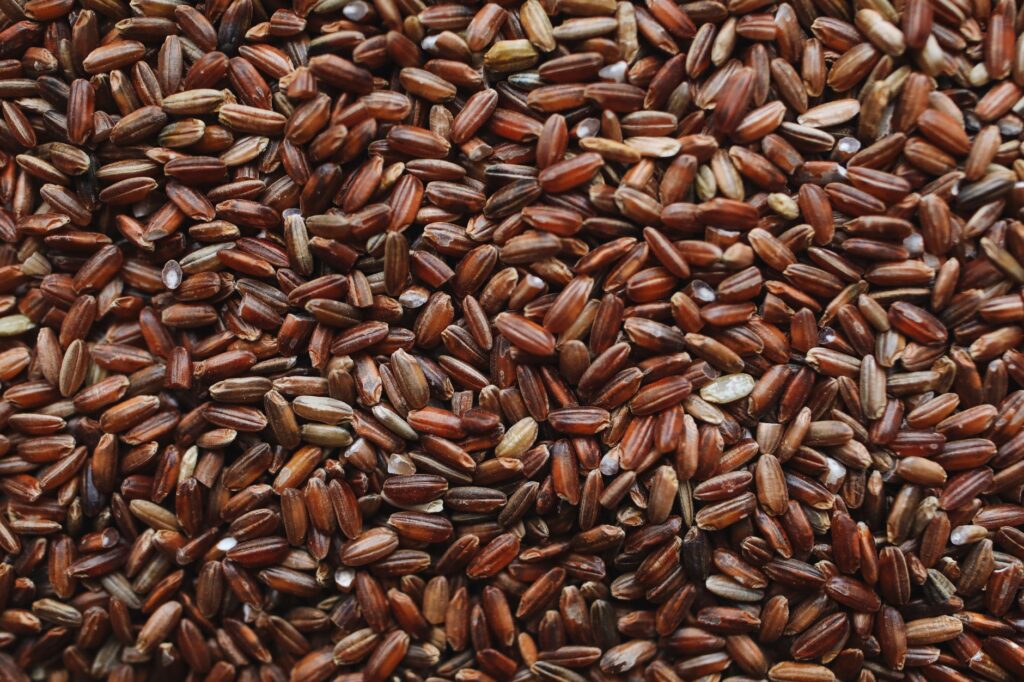
#1 **Red Matta (Kerala) – The Low‑GI Powerhouse**
**Description** – Short‑to‑medium grain, reddish‑brown pericarp, aromatic, slightly nutty. Grown primarily in the Palakkad region.
**Key Benefits**
– GI ≈ 55 (30 % lower than white rice).
– High in **anthocyanins**, **iron** (3.2 mg/100 g) and **zinc** (1.1 mg/100 g).
– Resistant starch ≈ 2.5 % of total starch.
**Best For** – Diabetics, pregnant women, and anyone seeking a traditional South‑Indian rice with a lower glycaemic impact.
**Score** – **9.4 / 10**
**Indian Availability & Price** – Widely stocked in Kerala and South‑India supermarkets; ₹80‑₹95 /kg in local mandis, ₹110 /kg on major e‑commerce platforms.
- Red Matta’s anthocyanins act as natural antioxidants, supporting cardiovascular health.
- Its moderate price makes it a realistic staple upgrade.
—
###
#2 **Black (Forbidden) Rice – The Antioxidant Titan**
**Description** – Long grain, deep black to purple colour, slightly chewy texture. Grown in the Himalayan foothills (Uttarakhand, Himachal).
**Key Benefits**
– GI ≈ 62.
– **Polyphenol** content > 2 × that of brown rice; rich in **iron** (4.5 mg/100 g).
– RS ≈ 3 % – excellent for gut microbiome.
**Best For** – Health‑conscious urban families, seniors needing iron, and gourmet cooks.
**Score** – **9.0 / 10**
**Indian Availability & Price** – Niche; sold in organic stores and online (₹150‑₹180 /kg). Limited bulk availability.
—
###
#3 **Brown Basmati (Punjab) – Fragrant Fibre**
**Description** – Long‑grain, aromatic, retains bran layer. Primarily cultivated in Punjab & Haryana.
**Key Benefits**
– GI ≈ 58 (lower than white Basmati’s 70).
– **Dietary fibre** ≈ 3.5 g/100 g (vs. 0.5 g in white).
– Good source of **magnesium** (44 mg/100 g) and **B‑vitamins**.
**Best For** – Families preferring the classic Basmati aroma without the glycaemic spike.
**Score** – **8.8 / 10**
**Indian Availability & Price** – Ubiquitous in all retail channels; ₹70‑₹85 /kg (white Basmati ≈ ₹60 /kg).
—
###
#4 **Kali (Red) Rice – The Rural Hero**
**Description** – Medium grain, deep red pericarp, earthy flavour. Grown in Odisha & Chhattisgarh.
**Key Benefits**
– GI ≈ 60.
– Highest **iron** among Indian red rices (3.8 mg/100 g).
– RS ≈ 2 %.
**Best For** – Rural households, school‑midday meals, and anyone looking for a cost‑effective nutrient boost.
**Score** – **8.5 / 10**
**Indian Availability & Price** – Common in eastern state mandis; ₹55‑₹70 /kg. Often sold as “unpolished red rice”.
—
###
#5 **Sona Masoori (Andhra Pradesh) – The Light‑Touch Staple**
**Description** – Medium‑long grain, lightweight, slightly translucent. Predominantly cultivated in Andhra & Telangana.
**Key Benefits**
– GI ≈ 65 (still lower than standard white rice).
– Lower **calorie density** (≈ 340 kcal/100 g vs. 360 kcal).
– Contains **beta‑carotene** (≈ 0.4 mg/100 g).
**Best For** – Daily meals for weight‑management and school‑age children.
**Score** – **8.2 / 10**
**Indian Availability & Price** – Extremely common; ₹45‑₹55 /kg in supermarkets; ₹60 /kg online.
—
###
#6 **Little Millet‑Infused Rice Blend** – **Hybrid Health Mix**
**Description** – 80 % traditional rice (usually Sona Masoori) blended with 20 % little millet (Samai). Marketed as “millet‑rice mix”.
**Key Benefits**
– Effective GI ≈ 58 (millet dilutes the rice’s GI).
– Boosts **dietary fibre** to 5 g/100 g.
– Adds **calcium** (≈ 30 mg/100 g) from millet.
**Best For** – Urban professionals seeking a quick swap without changing cooking habits.
**Score** – **8.0 / 10**
**Indian Availability & Price** – Packaged in 5 kg bags; ₹90‑₹110 /kg. Available in health‑food chains and online.
—
###
#7 **Organic Brown Rice (Uttarakhand) – The Clean Choice**
**Description** – Short‑to‑medium grain, brown colour, certified organic (USDA‑NPOP). Grown in the Himalayan region.
**Key Benefits**
– GI ≈ 68 (higher than other brown varieties due to lower amylose).
– Free from synthetic pesticides – important for pregnant women and children.
– Good source of **selenium** (≈ 7 µg/100 g).
**Best For** – Consumers prioritising organic certification over GI.
**Score** – **7.7 / 10**
**Indian Availability & Price** – Niche; ₹120‑₹150 /kg in premium grocery stores and online.
—
###
#8 **Jasmine (Thai) Rice – The Aromatic Exception**
**Description** – Long grain, fragrant, slightly sticky when cooked. Imported but grown in limited pockets of Tamil Nadu.
**Key Benefits**
– GI ≈ 70 (still acceptable for occasional indulgence).
– Contains **aroma‑enhancing 2‑acetyl‑1‑pyrroline**; no health impact but improves palatability.
**Best For** – Special occasions, festive dishes, and those craving fragrance without white rice’s high GI.
**Score** – **7.2 / 10**
**Indian Availability & Price** – Imported; ₹180‑₹220 /kg (premium supermarkets).
—
###
#9 **White Rice (IR 64) – The Baseline**
**Description** – The most widely cultivated Indian white rice, medium grain, polished.
**Key Benefits** – Low cost, high digestibility for infants.
**Best For** – Emergency rations, low‑budget meals where glycaemic control is not a priority.
**Score** – **5.5 / 10** (used as reference point).
**Indian Availability & Price** – Ubiquitous; ₹35‑₹45 /kg in rural mandis, ₹55 /kg in urban supermarkets.
—
##
Comparison at a Glance
| Rank | Variety | GI | Key Micronutrients (per 100 g) | Resistant Starch % | Typical Price (₹/kg) | Score |
|---|---|---|---|---|---|---|
| #1 | Red Matta | 55 | Fe 3.2 mg, Zn 1.1 mg, Anthocyanins | 2.5 | 80‑95 (mandi) / 110 (e‑com) | 9.4 |
| #2 | Black (Forbidden) | 62 | Fe 4.5 mg, Polyphenols | 3.0 | 150‑180 (online) | 9.0 |
| #3 | Brown Basmati | 58 | Mg 44 mg, B‑vitamins | 2.2 | 70‑85 (retail) | 8.8 |
| #4 | Kali (Red) | 60 | Fe 3.8 mg, Zn 1.0 mg | 2.0 | 55‑70 (mandi) | 8.5 |
| #5 | Sona Masoori | 65 | β‑carotene 0.4 mg | 1.5 | 45‑55 (supermarket) | 8.2 |
| #6 | Millet‑Rice Blend | 58 | Ca 30 mg, Fibre 5 g | 2.8 | 90‑110 (packaged) | 8.0 |
| #7 | Organic Brown (Uttarakhand) | 68 | Se 7 µg, Fibre 3 g | 1.8 | 120‑150 (premium) | 7.7 |
| #8 | Jasmine (Thai) | 70 | Low micronutrients | 1.2 | 180‑220 (import) | 7.2 |
| #9 | White IR 64 | 78‑85 | Very low | 0.5 | 35‑45 (rural) / 55 (urban) | 5.5 |
—
##
Honorable Mentions
| Variety | Why It’s Not in Top 9 | Typical Price (₹/kg) |
|———|———————-|———————-|
| **Kuthiraivali (Barnyard Millet) Rice Blend** | Millet proportion < 10 % – insufficient impact on GI. | 80‑100 |
| **Gobindobhog (Bangladeshi aromatic rice)** | Excellent aroma but GI ≈ 78, high price. | 250‑300 |
| **Ponni (Tamil Nadu) Rice** |