















Quick Answer
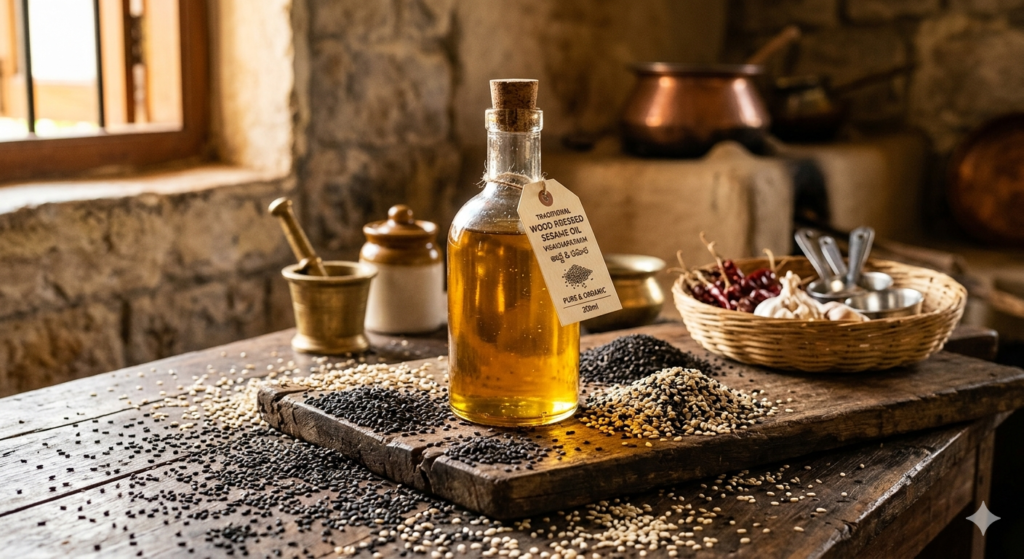
Wood pressed sesame oil — also called gingelly oil, til ka tel, or chekku nallennai in South India — is cold-extracted from raw sesame seeds using a traditional wooden press at temperatures below 45°C. It retains powerful antioxidants called sesamol and sesamin, a rich Vitamin E and B-complex profile, and a deep, toasty aroma that no refined sesame oil can replicate. It is one of the oldest and most therapeutically valued oils in Ayurvedic medicine, used daily for cooking, oil pulling, skin care, hair nourishment, and full-body massage.
If there is one oil that sits at the absolute heart of South Indian cuisine and Ayurvedic wellness, it is sesame oil. Called nallennai in Tamil (literally “good oil”), gingelly oil in common Indian-English usage, and til ka tel in Hindi, sesame oil has been pressed, cooked with, and applied medicinally for over 5,000 years. Ancient Indian texts including the Charaka Samhita and Sushruta Samhita describe it as the best among all oils — and modern nutritional science is steadily confirming why.
But not all sesame oils are equal. The deeply golden, intensely aromatic wood pressed sesame oil extracted through a traditional wooden chekku is a world apart from the pale, odourless refined sesame oil sold in supermarkets. In this complete guide, we explore everything you need to know — its unique nutritional profile, health and beauty benefits, the difference between black and white sesame oil, how to cook with it, and how to choose the best wood pressed gingelly oil in India.
Table of Contents
- What is Wood Pressed Sesame Oil?
- How is it Made — The Chekku Process
- Nutritional Profile — What Makes it Special
- 10 Proven Health Benefits
- Benefits for Hair — Growth, Strength & Scalp Health
- Benefits for Skin — Ayurvedic Beauty Secret
- Cooking with Wood Pressed Sesame Oil
- Black Sesame Oil vs White Sesame Oil
- Oil Pulling with Sesame Oil — Benefits & How-To
- How to Choose the Best Wood Pressed Sesame Oil
- Frequently Asked Questions
What is Wood Pressed Sesame Oil?
Wood pressed sesame oil is produced by slowly crushing raw sesame seeds — Sesamum indicum — inside a traditional wooden chekku (Tamil Nadu, Karnataka) or ghani (North India). The wooden pestle rotates continuously, generating gentle mechanical pressure that squeezes the oil from the seeds without the introduction of any external heat, solvents, or chemical agents.
This slow, deliberate extraction — often taking several hours per batch — keeps the oil temperature below 40–45°C throughout the process. At these temperatures, the oil’s heat-sensitive compounds — particularly sesamol, sesamin, sesamolin, Vitamin E, and a broad spectrum of B vitamins — remain completely intact. These are the same compounds that give wood pressed sesame oil its distinctive golden colour, its deep toasty-nutty aroma, and its extraordinary medicinal reputation.
The Ayurvedic perspective: Sesame oil is classified in Ayurveda as Ushna (warming), Guru (heavy/nourishing), and Snigdha (unctuous/moisturising). The Ashtanga Hridayam — a foundational Ayurvedic text — states that among all oils, sesame oil is the finest for abhyanga (full-body massage), oral health, and daily constitutional strengthening. This 5,000-year-old recommendation is now backed by modern biochemistry.
How is Wood Pressed Sesame Oil Made — The Chekku Process
The wooden chekku extraction process for sesame oil follows a careful sequence that has remained essentially unchanged for millennia:
Seed Selection
Premium raw sesame seeds (black or white) are handpicked and cleaned to remove stones, dust, and damaged seeds
Sun Drying
Seeds are dried naturally under sunlight to reduce moisture content — this improves oil yield and prevents rancidity
Chekku Pressing
Seeds are fed into the wooden mortar in small batches; the rotating wooden pestle crushes them slowly over hours
Natural Settling
Extracted oil is collected and allowed to settle naturally — fine seed particles sink to the bottom without chemical filtration
Bottling
Pure oil is bottled immediately without bleaching, deodorising, preservatives, or any further processing
The contrast with refined sesame oil production is stark. Refined sesame oil is extracted using hexane at 180–220°C, then subjected to acid treatment, bleaching with activated clay, deodorising with high-pressure steam, and finally mixed with synthetic antioxidants like TBHQ for shelf life. What remains shares little biochemical resemblance with the seed it came from.
Nutritional Profile — What Makes Wood Pressed Sesame Oil Unique
What separates sesame oil from almost every other plant oil is its extraordinary lignin content — specifically sesamol, sesamin, and sesamolin. These compounds are so unique that researchers have coined the term “sesame effect” to describe how they enhance the bioavailability and stability of other antioxidants (including Vitamin E) in the body. This is found only in unrefined, wood pressed sesame oil.
The “Sesame Effect” explained: Sesamin and sesamolin in wood pressed sesame oil are metabolised in the body to produce sesamol — a compound that actively inhibits the oxidation of Vitamin E. This means sesame oil not only contains antioxidants itself, it also protects and amplifies the antioxidant activity of other nutrients in your body. No other common cooking oil has this property.
10 Proven Health Benefits of Wood Pressed Sesame Oil
From cardiovascular protection to blood sugar regulation, wood pressed sesame oil offers a remarkably broad spectrum of health benefits — making it one of the most therapeutically complete cooking oils available.
Lowers Blood Pressure
Sesamin has been clinically shown to reduce systolic and diastolic blood pressure by inhibiting an enzyme involved in arterial contraction (Δ5-desaturase). Multiple trials have found significant BP reduction with regular sesame oil consumption.
Protects Heart Health
The balanced Omega-9 and Omega-6 fatty acid profile, combined with sesamin’s cholesterol-lowering effect, helps reduce LDL oxidation and plaque formation in arteries — supporting long-term cardiovascular health.
Regulates Blood Sugar
Research suggests that sesamol and sesamin improve insulin sensitivity and help regulate fasting blood glucose levels — making wood pressed sesame oil a beneficial choice for those managing type 2 diabetes or metabolic syndrome.
Powerful Anti-inflammatory
Sesamol is one of the most potent natural anti-inflammatory agents found in any cooking oil. It inhibits the NF-κB pathway — a central regulator of chronic inflammation linked to arthritis, heart disease, and metabolic disorders.
Liver Protection
Sesamin has demonstrated hepatoprotective (liver-protecting) effects in multiple studies — reducing oxidative damage to liver cells and supporting healthy liver enzyme levels, particularly in those with fatty liver conditions.
Bone Strength
Sesame seeds — and by extension their oil — are one of the richest plant sources of calcium, magnesium, and zinc. These minerals, retained in wood pressed sesame oil, support bone density and help prevent osteoporosis.
Antimicrobial Properties
Sesamol exhibits broad-spectrum antibacterial and antifungal activity, inhibiting pathogens including Staphylococcus aureus, E. coli, and Candida — making sesame oil effective in oral health and wound care applications.
Thyroid Support
Sesame oil is a good source of zinc and selenium — two trace minerals critical for thyroid hormone synthesis and conversion. Both are commonly deficient in modern diets, making wood pressed sesame oil a valuable dietary supplement.
Gut Health
The high fibre residue in wood pressed sesame oil (from the seed pressing process) combined with its fatty acid profile supports healthy gut motility, reduces constipation, and nourishes the intestinal lining.
Natural Oxidative Stability
Wood pressed sesame oil is among the most oxidatively stable of all polyunsaturated oils — thanks to its lignin antioxidants that prevent the oil from going rancid. This makes it suitable for higher-heat cooking compared to most other cold pressed oils.
Wood Pressed Sesame Oil for Hair — Benefits & Complete How-To
In South Indian homes, the Thursday hair oiling ritual with nallennai (sesame oil) is as sacred as the weekend bath itself. This isn’t cultural habit for its own sake — sesame oil genuinely outperforms almost every other natural oil in the depth and breadth of benefits it provides to hair and scalp.
-
Deep scalp nourishment: Sesame oil has a relatively small molecular weight that allows it to penetrate the scalp and hair follicle more deeply than heavier oils. The lignans and fatty acids nourish the follicle at its root, supporting healthier, faster-growing hair.
-
Natural UV filter: Sesame oil has been shown to block approximately 30% of UV radiation — making it a natural protective shield for hair exposed to harsh Indian sunlight. This helps prevent photo-oxidative damage, colour fading, and protein degradation in hair fibres.
-
Combats dandruff and scalp infections: The antimicrobial activity of sesamol is effective against the fungi and bacteria responsible for dandruff, scalp folliculitis, and seborrheic dermatitis — providing relief without the dryness caused by medicated shampoos.
-
Reduces premature greying: The antioxidants in wood pressed sesame oil protect melanin-producing cells (melanocytes) in the scalp from oxidative damage — the primary driver of early greying.
-
Repairs damaged and dry hair: The high linoleic acid content (42%) restores moisture to the hair cortex and seals the cuticle, reducing frizz, breakage, and dryness caused by heat styling or chemical treatments.
Traditional Chekku Hair Oil Ritual
???? Warm 2–3 tbsp of wood pressed sesame oil gently in a small vessel (not boiling)
???? Add a few curry leaves or dried amla pieces for enhanced benefits (optional)
???? Part your hair into sections and apply oil generously to the scalp
???? Massage in slow, firm circular motions for 10–15 minutes — this activates circulation
???? Comb through the length of hair with a wide-toothed comb to distribute oil evenly
???? Leave on for minimum 2 hours, or ideally overnight under a silk bonnet or towel
???? Wash out with a mild, sulphate-free shampoo — repeat twice weekly for best results
Wood Pressed Sesame Oil for Skin — The Ayurvedic Beauty Secret
In Ayurveda, abhyanga — the daily full-body self-massage with warm sesame oil — is considered one of the most powerful health practices available. It is prescribed to calm the nervous system, nourish the skin deeply, improve lymphatic drainage, and support overall vitality. Modern dermatology is now beginning to validate many of these ancient claims.
???? Deep Moisturisation
Linoleic acid in sesame oil mirrors the skin’s own lipid composition, allowing it to penetrate deeply and restore the skin barrier — particularly effective for dry, flaky, or eczema-prone skin.
☀️ Natural UV Protection
Sesame oil blocks approximately 25–30% of UV radiation. While not a replacement for sunscreen, it provides meaningful daily protection when applied as a pre-exposure moisturiser.
✨ Anti-Ageing
Sesamol and Vitamin E protect skin cells from free radical damage — the primary driver of premature ageing, wrinkle formation, and pigmentation.
???? Stress Relief Massage
Warm sesame oil massage (abhyanga) activates the parasympathetic nervous system, reducing cortisol levels and promoting deep relaxation — making it a natural remedy for anxiety and sleep issues.
???? Wound Healing
The antimicrobial and anti-inflammatory properties of sesamol make wood pressed sesame oil effective for minor wound care, sunburn relief, and reducing acne-related inflammation.
???? Baby Skin Care
Used for centuries across South India for newborn massage, sesame oil is gentle, naturally warming, and free of chemicals — making it ideal for delicate infant skin.
Cooking with Wood Pressed Sesame Oil
With a smoke point of approximately 175–180°C, wood pressed sesame oil is well suited to a wide range of everyday Indian cooking methods. Its exceptional oxidative stability — courtesy of its lignin antioxidants — means it holds up to heat far better than other cold pressed oils of similar polyunsaturation levels.
- →
South Indian tadka & tempering: The backbone of Tamil, Andhra, and Karnataka cooking — sesame oil tempered with mustard seeds, curry leaves, dried red chillies, and urad dal creates the signature flavour base of rice dishes, chutneys, and sambar.
- →
Stir-frying vegetables: Its nutty flavour elevates simple stir-fried vegetables, paneer dishes, and egg preparations. A small amount goes a long way — the flavour is concentrated and rich.
- →
Traditional rice preparations: Adding a teaspoon of warm sesame oil to steamed white rice with salt is a beloved South Indian comfort food. The oil blends beautifully and adds both flavour and nutrition.
- →
Ellu sadam & sesame rice: Sesame oil is the essential medium for traditional sesame rice (ellu sadam) — a festive South Indian dish where roasted sesame seeds, jaggery, and coconut are bound together with this aromatic oil.
- →
Dipping and finishing oil: Drizzled over hot idlis, dosas, or upma just before serving — or used as a finishing oil for soups and gravies — a small drizzle of wood pressed sesame oil adds remarkable depth and complexity.
- →
Marinades and dressings: Combined with lime, ginger, and garlic, wood pressed sesame oil makes an exceptional marinade for grilled meats, tofu, and vegetables — or a flavour-packed salad dressing for Asian-inspired preparations.
Recommended Product
Experience the authentic flavour and full nutritional depth of our traditionally extracted Wood Pressed Sesame (Gingelly) Oil — chekku-pressed, unrefined, and bottled fresh.
Black Sesame Oil vs White Sesame Oil — Which Should You Choose?
Wood pressed sesame oil is available from two types of seeds — black sesame and white sesame (also called hulled or natural sesame). Both produce excellent oils, but they have meaningfully different characteristics that make each better suited to different purposes.
Our recommendation: Use black sesame oil for hair oiling, skin massage, and Ayurvedic abhyanga — its higher antioxidant and lignan content makes it therapeutically superior. Use white sesame oil for everyday cooking where a more versatile, lighter flavour is preferred. Keeping both in your kitchen gives you the best of both worlds.
Oil Pulling with Sesame Oil — Ancient Practice, Modern Science
Oil pulling (kavala graha or gandusha) is an ancient Ayurvedic oral health practice that involves swishing oil in the mouth for 15–20 minutes to draw out toxins, bacteria, and impurities. Sesame oil is the oil prescribed in classical Ayurvedic texts for this practice — and recent clinical research confirms it works.
Multiple peer-reviewed studies have found that oil pulling with sesame oil significantly reduces Streptococcus mutans (the primary cavity-causing bacterium) in the mouth, reduces plaque and gingivitis comparable to chlorhexidine mouthwash, and improves overall oral hygiene — without the side effects of chemical mouthwashes.
How to Do Oil Pulling with Wood Pressed Sesame Oil
???? First thing every morning, before eating or drinking anything
???? Take 1 tablespoon of wood pressed sesame oil in your mouth
???? Swish gently around your mouth, between teeth, and under the tongue for 15–20 minutes
???? Do not swallow — the oil accumulates bacteria and toxins during the process
???? Spit into a bin (not the sink — it can clog pipes)
???? Rinse thoroughly with warm water and brush as normal
???? Practice daily for best results — noticeable improvements typically appear within 2–3 weeks
How to Choose the Best Wood Pressed Sesame Oil in India
With dozens of brands now claiming to sell “pure” or “natural” sesame oil, here is a practical, no-nonsense checklist for identifying genuine, high-quality wood pressed gingelly oil:
- ✅
Colour: Authentic wood pressed white sesame oil is a warm, deep golden-yellow. Black sesame oil is a rich amber-brown. Pale, water-clear oil has been refined or heavily filtered — avoid it.
- ✅
Aroma: Genuine wood pressed sesame oil has a distinctive, deep, toasty-nutty aroma even at room temperature. If it smells faint or neutral, it has been processed. The aroma should be immediately recognisable and pleasant.
- ✅
Ingredient label: The ingredient list should contain exactly one entry: “sesame oil” or “gingelly oil.” Any additional entries for preservatives (TBHQ, BHA), antioxidants, or flavouring agents indicate refined oil.
- ✅
Slight natural sediment: A small amount of natural sediment at the bottom of the bottle is a positive sign — it indicates the oil has not been chemically filtered or treated. Simply shake before use.
- ✅
Packaging: Quality wood pressed sesame oil is bottled in dark glass or food-grade opaque containers that protect against light-induced oxidation. Clear plastic bottles signal a brand that isn’t prioritising oil quality.
- ✅
Shelf life: Genuine wood pressed sesame oil has a shelf life of 8–12 months without preservatives. Its natural lignan antioxidants provide inherent stability. A shelf life longer than 12–14 months likely means synthetic preservatives have been added.
Frequently Asked Questions
What is wood pressed sesame oil?
Wood pressed sesame oil (also called chekku gingelly oil or til ka tel) is extracted from raw sesame seeds using a traditional wooden press at temperatures below 45°C. The process preserves the oil’s natural lignans (sesamol, sesamin), Vitamin E, and fatty acid profile — making it nutritionally superior to any refined or solvent-extracted sesame oil.
Is gingelly oil and sesame oil the same?
Yes — gingelly oil is simply the Indian-English term for sesame oil, used commonly in South India. Both refer to oil pressed from Sesamum indicum seeds. “Nallennai” in Tamil, “til ka tel” in Hindi, “nuvvula nune” in Telugu — all refer to the same oil from the same plant.
Which is better — black sesame oil or white sesame oil?
Both are excellent. Black sesame oil has a higher antioxidant content (including anthocyanins from the dark hull) and a richer flavour — making it better suited to hair care, skin massage, and Ayurvedic use. White sesame oil has a lighter, more versatile flavour ideal for everyday cooking. For maximum therapeutic benefit, black sesame oil is the traditional Ayurvedic preference.
Can I use wood pressed sesame oil for deep frying?
Wood pressed sesame oil (smoke point ~175–180°C) is suitable for stir-frying, tempering, shallow frying, and general everyday cooking. For repeated deep frying at very high temperatures, groundnut or mustard oil (both with higher smoke points) may be more suitable. Sesame oil is best used as a primary cooking and finishing oil rather than exclusively for deep frying.
Is wood pressed sesame oil good for hair growth?
Yes. Wood pressed sesame oil provides deep follicle nourishment, stimulates scalp circulation, blocks UV radiation that damages hair, and combats the fungal infections responsible for dandruff and hair loss. Its high linoleic acid content also reduces breakage and restores moisture to dry, damaged hair. Regular weekly oiling yields visible results within 4–6 weeks.
What is the difference between wood pressed and refined sesame oil?
Refined sesame oil is extracted using chemical solvents at temperatures above 180°C, then bleached, deodorised, and mixed with synthetic preservatives. This process destroys the sesamol, sesamin, Vitamin E, and natural flavour compounds that make sesame oil medicinally valuable. Wood pressed sesame oil retains all of these — it is a fundamentally different product, not just a “purer” version of the same thing.
Conclusion: The Original Superfood Oil — Rediscovered
Sesame oil has not survived five millennia of continuous use across the Indian subcontinent because of marketing — it has survived because it genuinely works. The Ayurvedic physicians who prescribed it for heart health, oral hygiene, skin care, hair nourishment, and daily constitutional strengthening were observing real, reproducible results. And now, with clinical research confirming the mechanisms behind sesamol, sesamin, and the unique “sesame effect,” we can appreciate both the wisdom and the science.
But the oil that delivers these benefits must be genuine — wood pressed, unrefined, and extracted without heat or chemicals. Refined sesame oil, stripped of its lignans and antioxidants, is a pale nutritional shadow of the real thing. The difference is not subtle.
Whether you drizzle it over hot rice, massage it into your scalp, practise daily abhyanga, or use it for oil pulling, authentic wood pressed gingelly oil is one of the most complete, multipurpose wellness investments you can make. Start with a small bottle — the aroma alone will tell you everything you need to know about the difference genuine extraction makes.
Experience the Difference
Shop our traditionally chekku-pressed Wood Pressed Sesame Oil — available in both black and white sesame varieties, unrefined, and delivered fresh across India.