













1. Why This Guide Exists – The Real Problem with Sidr Honey in India
India’s health‑food market is booming, but the surge in demand for “natural” sweeteners has also attracted a flood of sub‑standard and adulterated products. Sidr honey, harvested from the **Sidr (Lote) tree** (*Ziziphus spina‑christi*) that thrives in the arid zones of Rajasthan, Gujarat, and the Middle East, is prized for its dark amber colour, robust flavour, and high antioxidant profile.
Unfortunately, most Indian consumers face three intertwined challenges:
* **Lack of clear labelling** – Indian food regulations do not mandate a standardized “Sidr” tag, so many sellers simply label any dark honey as “Sidr”.
* **Adulteration** – Sugar syrups, cheaper floral honeys, or even synthetic glucose‑fructose blends are mixed to cut costs.
* **Price confusion** – Premium authentic Sidr honey can cost ₹2,500 per 250 g, yet the same price tag can be found on a jar that is 70 % sugar syrup.
This guide cuts through the noise, giving you a practical, evidence‑based roadmap to **identify, purchase, store, and use genuine Sidr honey** without falling prey to common scams.
- Authentic Sidr honey is dark, viscous, and has a distinct caramel‑like aroma.
- Look for lab‑tested “Total Phenolic Content” (TPC) values ≥ 200 mg GAE/100 g as a quality indicator.
- Trusted Indian brands source directly from beekeepers in Rajasthan’s Barmer & Jaisalmer districts.
- Store honey in a cool, dark place; avoid refrigeration to prevent crystallisation.
- Use Sidr honey raw or lightly warmed (≤ 40 °C) to preserve its enzymes and antioxidants.
2. What to Look for When Buying – 6 Essential Factors
2.1. Botanical & Geographical Origin
* **Label wording** – The pack must explicitly state “Sidr (Lote) honey” and mention the **state/district** (e.g., Barmer, Jaisalmer, Bikaner).
* **Traceability** – Reputable brands provide a QR code linking to a batch‑wise source map or a COA (Certificate of Analysis) from the beekeeping cooperative.
2.2. Purity Claims & Lab Test Results
* **Total Phenolic Content (TPC)** – Higher phenolics correlate with antioxidant power. Look for ≥ 200 mg GAE/100 g.
* **Sugar profile** – Authentic honey shows a fructose > glucose ratio (≈ 1.2 : 1). If the label lists “glucose‑fructose syrup” or “inverted sugar”, walk away.
2.3. Packaging Material
* **Glass jars** are preferred as they do not leach chemicals and preserve flavour.
* If plastic is used, it should be **food‑grade PET** with a UV‑protective coating. Avoid low‑grade HDPE that can react with honey’s acidity.
2.4. Certification & Third‑Party Testing
* **FSSAI licence** – Mandatory for all edible products.
* **Organic certification** (India Organic, USDA‑Organic) is a bonus but not essential for Sidr honey.
* Look for **ISO 22000** or **HACCP** compliance, indicating a robust food‑safety system.
2.5. Colour, Aroma & Viscosity (Sensory Checks)
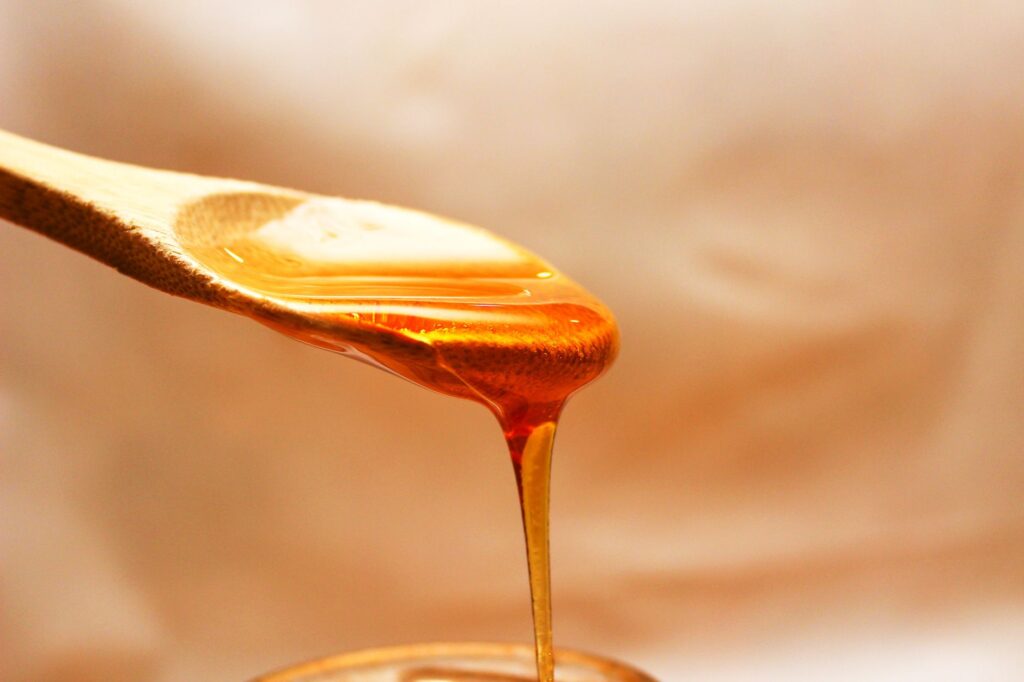
* **Colour** – Deep amber to dark brown, almost mahogany.
* **Aroma** – Rich, caramel‑like with faint woody notes.
* **Viscosity** – Should flow slowly; a watery texture often signals dilution.
2.6. Price vs. Quantity
* Genuine Sidr honey commands a premium. Prices dramatically lower than the market average usually signal adulteration.
| Quality Tier | Typical Price (₹/250 g) | Key Indicators |
|---|---|---|
| Premium (Certified) | 2,200 – 2,800 | Origin disclosed, COA, TPC ≥ 200 mg, glass jar |
| Mid‑range | 1,400 – 1,900 | Origin mentioned, basic lab test, PET jar |
| Budget/Unverified | 800 – 1,200 | No origin, no lab data, possible syrups |
3. Red Flags & Adulteration Signs – What to Avoid
| Red Flag | Why It Matters | Quick Test |
|———-|—————-|————|
| **Clear or very light colour** | Sidr honey is naturally dark; light colour suggests dilution with light floral honey or sugar syrup. | Drop a spoonful on a white plate; genuine honey will stay dark and spread slowly. |
| **Crystallisation within a week** | Pure honey crystallises slowly (months). Rapid crystallisation hints at added glucose syrup. | Observe texture after 7 days at room temperature. |
| **Excessive froth when stirred** | Air trapped in syrup mixes creates froth; pure honey is dense. | Stir vigorously; if large bubbles appear, suspect adulteration. |
| **Absence of a batch/lot number** | No traceability = higher fraud risk. | Check label; missing details = red flag. |
| **Unrealistically low price** | Market price floor for authentic Sidr is ~₹800 for 250 g; lower prices are almost always fake. | Compare with price data box above. |
| **No FSSAI licence number** | Legal requirement; missing licence suggests illegal operation. | Verify licence on the FSSAI portal. |
**Simple Water Test** – Mix 1 ml honey with 10 ml warm water (≈ 40 °C). Pure honey dissolves slowly leaving a thin film; syrup dissolves instantly and forms a clear solution.
4. How to Use, Cook & Store Sidr Honey
4.1. Raw Consumption (Best for Health)
* **Morning tonic** – 1 tsp (≈ 7 g) diluted in warm water with a pinch of lemon.
* **Pre‑workout** – Pair with a handful of soaked almonds for sustained energy.
4.2. Culinary Uses (Low‑Heat)
* **Dressings & marinades** – Mix with mustard, olive oil, and herbs.
* **Baking** – Substitute up to 30 % of white sugar; keep oven temperature ≤ 180 °C to preserve enzymes.
* **Traditional Indian sweets** – Use in *gud‑coconut laddus* or *halwa* for a richer flavour profile.
4.3. Therapeutic Applications
* **Cough & throat soothing** – ½ tsp with warm ginger‑tea, twice daily.
* **Skin mask** – Combine 1 tsp honey with 1 tsp turmeric; apply for 15 min, rinse with lukewarm water.
4.4. Storage Guidelines
* **Container** – Keep in the original glass jar, tightly sealed.
* **Environment** – Store in a cool (≤ 25 °C), dark pantry; avoid direct sunlight.
* **Shelf life** – Unopened, authentic Sidr honey can last 2–3 years; once opened, aim to use within 12 months for optimal antioxidant activity.
* **Avoid refrigeration** – It accelerates crystallisation and can introduce moisture.
5. Price Range in INR Across Quality Tiers
The Indian market currently offers Sidr honey in three broad tiers. Prices fluctuate with harvest season (Oct‑Feb) and import duties for Middle‑East sourced batches.
- Premium (Certified Authentic): ₹2,200 – ₹2,800 per 250 g jar. Includes full traceability, lab‑tested TPC, and glass packaging.
- Mid‑range (Verified Origin, Limited Testing): ₹1,400 – ₹1,900 per 250 g. May use PET jars; batch numbers present but COA optional.
- Budget/Unverified: ₹800 – ₹1,200 per 250 g. Often lacks origin claim, may be blended with syrups.
6. Recommended Brands & Sources in India
| Brand / Source | Origin | Certification | Typical Price (₹/250 g) | Why It’s Trusted |
|—————-|——–|—————|————————|——————|
| **Sisira Organics Sidr Honey** | Barmer, Rajasthan | FSSAI, ISO 22000, COA (TPC ≈ 215 mg) | 2,350 | Direct farmer cooperative, glass jar, QR traceability |
| **Beehive India – Royal Sidr** | Jaisalmer, Rajasthan | FSSAI, HACCP | 2,100 | Seasonal harvest, third‑party lab reports |
| **Nature’s Nectar – Sidr Gold** | Sikkim (imported from UAE) | USDA‑Organic, FSSAI | 2,600 | Certified organic, premium packaging |
| **PureBee (Mid‑range)** | Gujarat (local beekeepers) | FSSAI, basic lab test | 1,600 | Transparent sourcing, PET jar |
| **Local Farmers’ Co‑op (Online)** | Barmer village collectives | Batch‑wise COA, glass | 2,200 | Community‑driven, supports tribal beekeepers |
*Tip:* Purchase directly from brand websites or verified e‑commerce platforms (Amazon India “Fulfilled by Amazon”, BigBasket, Nature’s Basket). Avoid street stalls unless you can verify the beekeeper’s credentials.
7. Common Mistakes to Avoid
- **Buying “Sidr‑flavoured” honey** – Flavouring does not equal authenticity.
- **Storing in the refrigerator** – Leads to crystallisation and moisture ingress.
- **Using high heat (> 40 °C) for prolonged periods** – Destroys enzymes and antioxidants.
- **Assuming “organic” equals “Sidr”** – They are separate attributes; a honey can be organic but not Sidr.
- **Ignoring batch numbers** – Without them you cannot trace the product back to the source.
8. FAQ
9. Quick Summary Checklist
- ✅ Verify **Sidr (Lote) + specific district** on the label.
- ✅ Look for **TPC ≥ 200 mg GAE/100 g** or a lab report.
- ✅ Choose **glass jars**; PET only if food‑grade with UV coating.
- ✅ Ensure **FSSAI licence**, batch/lot number, and preferably a QR‑linked COA.
- ✅ Avoid honey that is **light‑coloured, watery, or crystallises within a week**.
- ✅ Store in a **cool, dark pantry**, sealed tightly; no refrigeration.
- ✅ Use raw or gently warmed (≤ 40