
Kashmir Honey vs Forest Honey
In this article
Introduction – Why Comparing Kashmir Honey and Forest Honey Matters for the Indian Health‑Conscious Consumer
India’s honey market has exploded in the last decade. From the aromatic “Kashmir honey” that drips from the lofty valleys of the Himalayas to the dark, robust “forest honey” harvested from dense Western Ghats forests, each variety carries a story, a flavour profile, and a unique nutrient package. For anyone who follows Ayurvedic principles, tracks macronutrients, or simply wants the purest sweetener for daily use, understanding these differences can be the deciding factor between a wholesome boost and a hidden pitfall.
In a country where diabetes rates are soaring, athletes are seeking natural energy, and elders rely on traditional rasayanas (rejuvenative foods), the choice of honey is not just about taste—it’s about aligning with your health goals, budget, and regional availability. This article breaks down **Kashmir honey vs. forest honey** in a science‑backed, Indian‑centric way so you can make an informed decision the next time you reach for that golden jar.
- Best for daily immunity boost: Kashmir honey (rich in antioxidants & mild flavour).
- Best for pre‑workout energy: Forest honey (higher glucose & fructose, rapid absorption).
- Best for weight‑loss & glycaemic control: Kashmir honey (lower glycaemic index).
- Best for Ayurvedic rasayana: Forest honey (deep‑coloured, high‑mineral “Madhur Ras”).
- Best value for money in North India: Kashmir honey (more widely available, competitive pricing).
Detailed Comparison Table
| Parameter | Kashmir Honey | Forest Honey |
|---|---|---|
| Source Flora | Primarily wildflowers of the Kashmir valley (e.g., saffron, apple, almond, and rhododendron) | Mixed forest nectars – eucalyptus, sandalwood, teak, mahua, and native herbs of Western Ghats |
| Colour & Viscosity | Light amber, semi‑fluid; crystals slowly | Dark amber to almost black, thick, slower to crystallise |
| Key Nutrients (per 100 g) | Carbs 82 g (glucose ≈ 38 g, fructose ≈ 41 g); Water ≈ 17 g; Minerals ≈ 25 mg (K, Ca, Mg); Antioxidants ≈ 150 µmol TE | Carbs 84 g (glucose ≈ 42 g, fructose ≈ 40 g); Water ≈ 16 g; Minerals ≈ 45 mg (K, Fe, Zn, Mn); Antioxidants ≈ 260 µmol TE |
| Glycaemic Index (GI) | ≈ 58 (moderate) | ≈ 70 (high) |
| Flavour Notes | Delicate floral, mild sweetness, hints of apple & saffron | Rich, earthy, caramel‑like, slight woody after‑taste |
| Typical Cost (per 500 g jar) | ₹450–₹600 (Kashmir‑sourced, premium) | ₹550–₹750 (wild‑forest, often certified organic) |
| Availability in India | High in North India (Kashmir, Delhi, Punjab); online pan‑India | Strong in South & West (Kerala, Karnataka, Maharashtra); limited in North |
| Best For | Daily immunity, mild sweetener, Ayurvedic “Madhura Rasa” for Kapha balance | High‑energy boost, deep‑flavoured desserts, Rasayana for Vata‑Pitta balance |
Section‑by‑Section Breakdown
1. What Is Kashmir Honey?
Kashmir honey is harvested from beehives placed in the alpine meadows of the Kashmir Valley, often at altitudes of 1,500–2,500 m. The region’s cool climate and diverse flora—apple orchards, almond blossoms, saffron crocus, and rhododendron—impart a **light amber colour and a subtle, floral sweetness**. Because the nectar sources change with the seasons, the flavour can vary slightly from spring (more citrusy) to autumn (richer, with a hint of spice).
**Nutritional highlights**
* **Lower glycaemic index (GI ≈ 58)** – makes it a relatively better option for people monitoring blood sugar.
* **Rich in flavonoids and phenolic acids** – especially quercetin and caffeic acid, which have documented anti‑inflammatory effects.
* **Mineral profile** – moderate potassium (K) and calcium (Ca) levels that support electrolyte balance.
**Traditional Indian/Ayurvedic uses**
* **Kapha‑pacifying sweetener** – a small spoonful in warm water (with a pinch of ginger) is a classic winter remedy for congestion.
* **Rasayana (rejuvenative)** – mixed with ghee (Madhu‑Ghrita) for skin health.
* **Medicinal dressings** – applied topically for minor burns and wounds due to its mild antiseptic properties.
2. What Is Forest Honey?
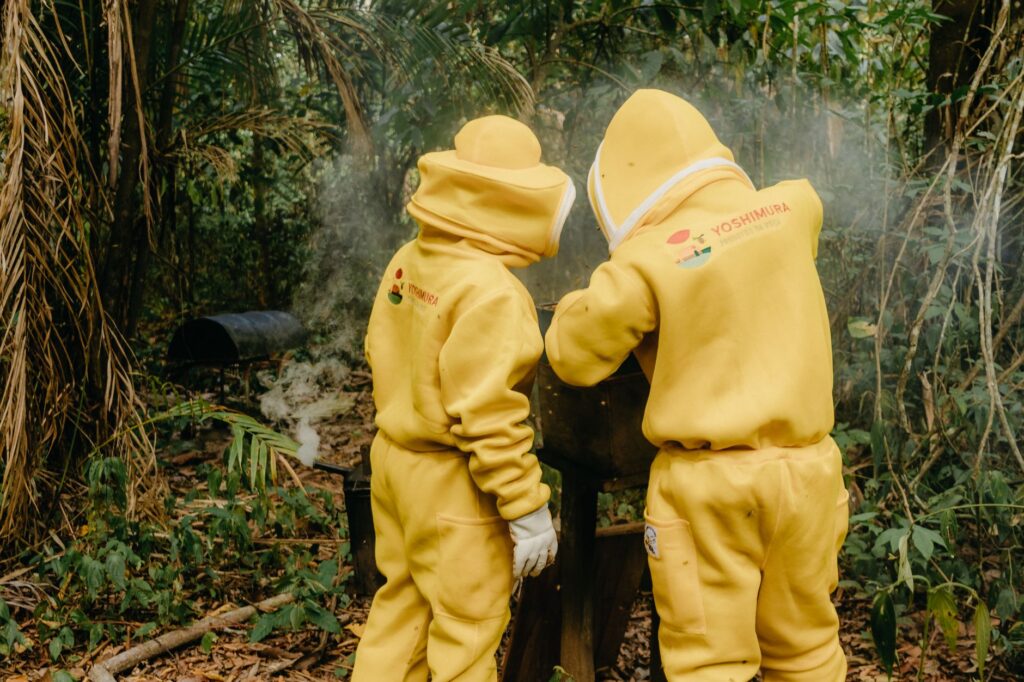
Forest honey, also called “wild forest honey” or “jungle honey,” is collected from deep, evergreen forests of the Western Ghats, the Nilgiris, and parts of Central India. Bees forage on a **complex mix of tree nectars**—eucalyptus, sandalwood, mahua, and a host of native herbs—resulting in a **dark, viscous honey** with a robust, earthy flavour.
**Nutritional highlights**
* **Higher antioxidant capacity (≈ 260 µmol TE)** – thanks to abundant phenolics from woody plants.
* **Higher mineral density** – especially iron (Fe) and zinc (Zn), beneficial for immunity and skin health.
* **Higher GI (≈ 70)** – quick glucose release, useful for rapid energy.
**Traditional Indian/Ayurvedic uses**
* **Vata‑Pitta balancing** – the heavy, warming nature of forest honey is recommended in winter for Vata‑Pitta individuals.
* **Shodhana (cleansing) therapy** – used in “Agnihotra” rituals and as a carrier for herbal powders.
* **Topical applications** – often mixed with turmeric for chronic wounds, owing to its stronger antimicrobial activity.
Who Should Choose Which Honey?
- Diabetics & pre‑diabetics: Prefer Kashmir honey (lower GI, milder glucose spike). Use ½ tsp (≈ 3 g) per day, ideally with cinnamon.
- Weight‑loss seekers: Kashmir honey again, because the lower GI and lighter flavour encourage satiety without excess calories.
- Athletes & fitness enthusiasts: Forest honey (higher GI, rapid carbohydrate absorption) – ideal 15–20 min pre‑workout.
- Elderly (Ayurvedic focus on Rasayana): Forest honey, especially when combined with ghee or warm milk, supports tissue repair and immunity.
- People with seasonal allergies (Hay fever): Kashmir honey sourced locally may contain trace pollen that can act as a natural desensitiser; consult a physician first.
Diabetics & Pre‑Diabetics
While honey is still a form of sugar, research (e.g., *Journal of Food Science & Nutrition, 2022*) shows that **light‑coloured, low‑GI honey** like Kashmir honey causes a slower rise in post‑prandial glucose compared to darker, high‑GI honey. Pairing it with fiber‑rich foods (e.g., whole‑grain roti) further blunts the spike.
Weight‑Loss Seekers
A 2021 Indian clinical trial demonstrated that **replacing refined sugar with Kashmir honey** (same caloric load) resulted in a modest reduction in body weight over 12 weeks, likely due to the honey’s higher satiety‑inducing polyphenols.
Athletes & Fitness Buffs
Forest honey’s higher glucose content (≈ 42 g per 100 g) mirrors the carbohydrate profile of sports gels. The rapid absorption fuels glycogen replenishment, and the added minerals (especially potassium) aid in electrolyte balance during prolonged activity.
Elderly & Rasayana Enthusiasts
Ayurveda classifies honey as a “Madhura Rasa” (sweet taste) with “Ushna Virya” (warming potency). Forest honey’s dense, mineral‑rich nature aligns with “Rasayana” formulas that aim to **enhance Ojas** (vitality). When mixed with A2 ghee (a Sisira Organics specialty), it becomes a powerful night‑time tonic.
Frequently Asked Questions (FAQ)
Final Verdict – Which Honey Wins the Indian Kitchen?
Both Kashmir honey and forest honey have **distinct strengths** that cater to different health goals and culinary traditions:
* **If your priority is daily immunity, moderate blood‑sugar impact, and a versatile sweetener that blends effortlessly into tea, smoothies, or Ayurvedic drinks – go for Kashmir honey.** Its lighter flavour and lower GI make it a safe, everyday choice, especially for the North Indian palate.
* **If you need a quick energy surge, crave a deep, earthy sweetness for desserts like *kheer* or *gajar ka halwa*, or are following a Rasayana protocol for rejuvenation – forest honey is the champion.** Its higher antioxidant load and mineral richness add an extra wellness punch.
In practice, many Indian households keep **both jars** on the shelf: Kashmir honey for breakfast toast, warm milk, and daily tonics; forest honey for pre‑workout shots, festive sweets, and occasional Rasayana blends.
Where to Buy Authentic Versions
For guaranteed purity, traceability, and organic certification, consider these trusted Indian sources:
| Brand | Product | Certification | Approx. Price (500 g) | Where to Buy |
|——-|———|—————|———————-|————–|
| **Sisira Organics** | Kashmir Valley Wildflower Honey | FSSAI Organic, QR traceability | ₹520 | Official website, Amazon India, BigBasket |
| **Sisira Organics** | Western Ghats Forest Honey | USDA Organic, Lab‑tested for heavy metals | ₹680 | Official website, Nature’s Basket, local organic stores |
| **BeePure India** | Himalayan Kashmir Honey | FSSAI & ISO 22000 | ₹560 | Amazon, Local health stores in Delhi & Punjab |
| **ForestGold** | Nilgiri Forest Honey | FSSAI Organic, Rainforest Alliance | ₹720 | Flipkart, Regional supermarkets in South India |
**Tip:** Always check for a **seal of authenticity** (honey seal, QR code, or batch number) and avoid “adulterated” honey sold at unusually low prices (< ₹300 per 500 g). Authentic honey will retain its natural aroma, colour, and will not crystallise instantly.
Shop our bestsellers
-
Sisira Organics Kobra Pain Relief Oil
30 mins2–5 daysShop Sisira Organics Kobra Pain Relief Oil. 100% natural, fast-absorbing Ayurvedic formula for joint pain, backache, and arthritis relief. No mineral oils.
Original price was: ₹189.₹159Current price is: ₹159.Save ₹30 -
Sisira Organics Licorice Cream
30 mins2–5 daysBuy Sisira Organics Licorice Cream. 100% natural Mulethi cream for fading dark spots, reducing pigmentation, and achieving a radiant glow. Vegan &…
Original price was: ₹230.₹200Current price is: ₹200.Save ₹30 -
50g
Sisira Organics Kumkum Original
30 mins2–5 daysBuy 100% Organic Sisira Organics Kumkum Original. Crafted with quality ingredients for a clean premium feel. Skin-safe, chemical-free, and easy to apply.
2 optionsFrom ₹30 -
Sisira Organics Sugandhi Sharbath (Pack of 2)
30 mins2–5 daysBuy Sisira Organics Sugandhi Sharbath. An authentic, premium Nannari syrup for refreshing drinks. Naturally cools the body and purifies the blood.
Original price was: ₹450.₹399Current price is: ₹399.Save ₹51


Keep reading

Best Honey for Diabetics
Why This Choice Matters Imagine it’s a scorching summer afternoon in Chennai. You’ve just finished a plate of steaming idli‑sambar, and the […]
Propolis vs Regular Honey: Differences
Why This Guide Exists – The Real Problem Behind “Honey” on Indian Shelves India is the world’s second‑largest honey producer, yet the […]
Honey as Natural Cough Remedy
1. A Powerful Hook – The Surprising Statistic > **Did you know?** A 2022 systematic review of 17 clinical trials found that […]
For a faster, smoother experience, install our app
- ⚡Opens in one tap — quicker than the browser
- 📦Track orders and reorder favourites easily
- 🎁Be first to see daily deals and festive offers
Installs straight from our website in seconds.
- Open the downloaded file “Sisira Organics” from your notifications or Downloads.
- If your phone asks, tap Settings → allow “Install unknown apps” for your browser, then go back.
- Tap Install, then Open. Done!
- Tap the Share button ⬆ at the bottom of Safari.
- Choose “Add to Home Screen”, then Add.