

How to Store Raw Honey (Shelf Life Guide)
In this article
- Why This Guide Exists – The Raw Honey Dilemma
- What to Look for When Buying Raw Honey (5‑7 Factors)
- Red Flags & Adulteration Signs – What to Watch Out for in India
- How to Use, Cook, and Store Raw Honey for Maximum Shelf Life
- Price Range in INR Across Quality Tiers
- Recommended Brands & Sources in India
- Common Mistakes to Avoid
- FAQ
- Quick Summary Checklist
Why This Guide Exists – The Raw Honey Dilemma
Raw honey is celebrated in Indian kitchens for its antimicrobial properties, soothing throat relief, and natural sweetness. Yet, many consumers face two persistent problems:
1. **Shelf‑life confusion** – Unlike processed sugar, honey can crystallise, ferment or spoil if stored incorrectly.
2. **Adulteration nightmare** – The Indian market is flooded with “honey” that is diluted with sugar syrup, corn syrup, or even artificial sweeteners.
These issues lead to wasted money, compromised health, and the loss of honey’s genuine benefits. This guide cuts through the noise, giving you a step‑by‑step roadmap to buy, detect, store, and use raw honey safely, while maximizing its shelf life.
- Raw honey stays safe for years if kept away from heat, light, and moisture.
- Authentic Indian raw honey is typically sourced from Apis dorsata (wild), Apis cerana (native), or Apis mellifera (cultured) hives.
- Adulteration is rampant; learn the visual, sensory, and lab‑test clues.
What to Look for When Buying Raw Honey (5‑7 Factors)
1. Source & Floral Origin
– **Monofloral vs. Multifloral** – Monofloral (e.g., *Eucalyptus*, *Brahmi*, *Mahua*) often have distinct flavours and higher antioxidant levels.
– **Geographical Indication (GI)** – Look for GI tags like “Kashmir Wild Honey” or “Sikkim Organic Honey”. These are protected and usually genuine.
2. Certification & Lab Test Reports
– **FSSAI Organic/Raw Label** – Must state “Raw” and “Unpasteurised”.
– **ISO 22000 / HACCP** – Indicates a controlled processing environment.
– **Lab‑tested for Sugar Profile** – Authentic raw honey shows a fructose:glucose ratio of ~1.2–1.4 and low sucrose (<1%). Many premium brands attach a QR code linking to the latest test report.
3. Packaging Material
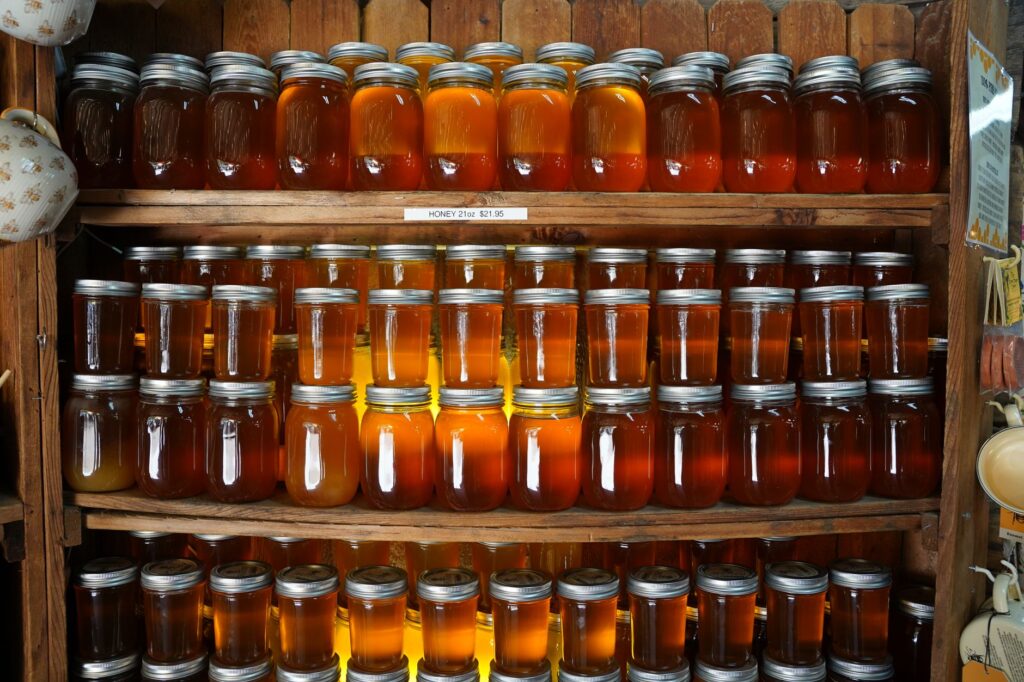
– **Dark Glass (Amber) or High‑Density PET** – Protects from UV‑induced degradation.
– **Seal Integrity** – Look for tamper‑evident caps or heat‑sealed lids. Avoid thin plastic sachets; they allow moisture ingress.
4. Colour, Viscosity & Aroma
– **Colour Spectrum** – From light amber (e.g., *Acacia*) to dark amber (e.g., *Sourwood*). Darker does not mean “bad”; it reflects mineral content.
– **Viscosity** – Should flow slowly; overly watery honey may be diluted.
– **Aroma** – Fresh floral notes; a faint “yeasty” smell can indicate fermentation.
5. Price Point Relative to Quality
– Raw honey is **not cheap**. Expect ₹250‑₹350 per 250 g for standard organic, ₹500‑₹800 for monofloral, and ₹1,200+ for premium wild or medicinal varieties.
6. Transparency of Harvest Date & Batch Number
– Authentic sellers provide a harvest month/year and batch code. This helps trace freshness; honey improves with age but should not be older than 3‑5 years without proper storage.
7. Brand Reputation & Traceability
– Brands that openly share beekeeping practices, farmer partnerships, and supply‑chain audits are more trustworthy.
- Prioritise GI‑tagged, dark‑glass packaged honey with lab reports.
- Beware of ultra‑low prices; they usually hide adulteration.
- Check harvest date – fresher honey retains enzymes better.
Red Flags & Adulteration Signs – What to Watch Out for in India
| Red Flag | What It Looks Like | Why It Matters |
|—|—|—|
| **Crystallisation within weeks** | Fine, uniform crystals in a clear jar | Indicates high glucose content or added sugar syrup that crystallises faster. |
| **Excessive water content** | Honey feels runny, forms droplets on a spoon | Water > 20 % promotes fermentation and is a sign of dilution. |
| **Unusual colour shift** | Sudden darkening after a short period | Oxidation from light exposure or added caramelised sugar. |
| **Absence of pollen** | Microscopic test shows no pollen grains | Pollen is a natural fingerprint; its absence suggests filtration or syrup addition. |
| **Over‑sweet, flat taste** | Lacks the complex floral notes, tastes like cane sugar | Common in honey mixed with high‑fructose corn syrup (HFCS). |
| **No lab report or vague “organic” claim** | Only a generic logo, no QR code | Lack of transparency often hides adulteration. |
**Simple Home Test (Not 100 % conclusive):**
– **Water Test:** Drop a spoonful of honey into a glass of water. Pure honey will settle at the bottom and not dissolve quickly. If it spreads or forms a syrupy layer, it may be adulterated.
– **Flame Test:** Dip a cotton wick in honey and try to light it. Pure honey will burn; adulterated honey (high water/sugar syrup) will sputter or not ignite.
**Lab Test Recommendations:**
– **HMF (Hydroxymethylfurfural) level** – Should be < 40 mg/kg for fresh raw honey. Higher values indicate overheating or storage issues.
– **C-4 Sugar Test** – Detects corn syrup adulteration.
How to Use, Cook, and Store Raw Honey for Maximum Shelf Life
Everyday Usage
– **Raw Sweetener** – Stir ½ tsp into warm (≤ 40 °C) tea, lassi, or smoothies.
– **Top‑up for Ayurvedic Remedies** – Mix with *Triphala* powder or *Ashwagandha* for enhanced absorption.
– **Skin & Hair** – Apply a thin layer as a humectant mask; rinse after 20 minutes.
Cooking with Raw Honey – Do’s & Don’ts
| Do | Don’t |
|—|—|
| Use in **low‑heat** preparations (salad dressings, marinades, desserts) | Boil or fry above **60 °C** for prolonged periods – enzymes (diastase, invertase) degrade, and HMF forms. |
| Pair with **spices** like *cinnamon*, *cardamom*, *clove* for antioxidant synergy | Add directly to hot oil or deep‑fry batters – it will caramelise and create acrylamide. |
| Combine with **citrus** for a natural preservative in jams | Store honey‑based sauces at room temperature for > 2 weeks without refrigeration. |
Optimal Storage Practices
– **Container:** Dark amber glass or high‑density PET, airtight.
– **Location:** Cool, dark pantry (15‑20 °C), away from direct sunlight.
– **Humidity:** < 60 % RH; use silica gel packets if needed.
– **Shelf Life:** Up to **3 years** if unopened; 1‑2 years after opening with proper care.
– **Re‑crystallisation:** Warm gently (30‑35 °C) in a water bath to liquefy; avoid microwave.
**Step‑by‑Step Storage Routine**
1. **Transfer** honey from the original jar to a clean, sterilised dark glass bottle if the original is plastic.
2. **Seal tightly** – ensure the lid is screwed down and the rim is dry.
3. **Label** with purchase date and batch number.
4. **Place** the bottle on a shelf, not the floor, to avoid temperature fluctuations.
5. **Check** quarterly for signs of fermentation (foam, off‑smell) and re‑seal if needed.
Price Range in INR Across Quality Tiers
| Tier | Typical Honey Type | Approx. Price (₹) per 250 g | Expected Characteristics |
|—|—|—|—|
| **Budget** | Multi‑floral, non‑GI, basic packaging | 250 – 350 | May be lightly filtered; lower enzyme activity. |
| **Mid‑Range** | Certified organic, monofloral, amber glass | 500 – 800 | Good flavour, authentic pollen, lab‑tested. |
| **Premium** | Wild‑crafted, GI‑tagged, limited batch, dark glass | 1,200 – 2,200 | High antioxidant content, distinct aroma, traceable beekeepers. |
| **Luxury/Medicinal** | *Madhuca longifolia* (Mahua) or *Sidr* honey, raw, unfiltered | 2,500 – 4,000 | Rare, high phenolic compounds, often used in Ayurvedic formulations. |
Recommended Brands & Sources in India
| Brand | Key Strength | Where to Buy |
|—|—|—|
| **Sisira Organics** | Dark amber, raw, lab‑tested, QR‑linked report | Official website, Amazon India, local organic stores |
| **Bee Positive** | GI‑tagged *Sikkim Wild Honey*, sustainable beekeeping | Company website, select supermarkets |
| **Ziva Organic** | 100 % raw, unfiltered, *Brahmi* monofloral | Online (Ziva.com), health‑food fairs |
| **Organic India** | Certified organic, *Acacia* light honey, glass jars | Major retail chains (Big Bazaar, Nature’s Basket) |
| **Pure Honey Farms (Punjab)** | Farm‑direct, *Madhuca* honey, transparent batch info | Direct farm website, local farmer’s markets |
**Tip:** Always request the latest lab report or scan the QR code before purchasing.
Common Mistakes to Avoid
- Storing honey in the refrigerator – it accelerates crystallisation and moisture absorption.
- Using honey as a direct substitute for sugar in baked goods without adjusting temperature.
- Buying honey in clear plastic bottles that are not UV‑protected.
- Ignoring harvest dates; old honey can lose enzymes and develop off‑flavours.
- Assuming “honey” = “raw” – always read the label for “unpasteurised”.
FAQ
Quick Summary Checklist
- ✅ Choose dark‑glass, tamper‑sealed jars with a clear harvest date.
- ✅ Verify FSSAI “Raw” label, GI tag, and QR‑linked lab report.
- ✅ Avoid ultra‑cheap honey; price reflects authenticity.
- ✅ Store at 15‑20 °C, away from sunlight and moisture.
- ✅ Use below 40 °C for culinary purposes; warm gently to de‑crystallise.
- ✅ Spot red flags: watery texture, rapid crystallisation, off‑smell.
- ✅ Re‑check quarterly for fermentation signs.
References
- National Institute of Nutrition (NIN). “Honey: Composition, Benefits and Safety.” 2022.
- FSSAI. “Guidelines for Labelling of Honey.” 2021.
- R. K. Singh et al., “Detection of Sugar Syrup Adulteration in Indian Honey Using HPLC.” *Food
Shop our bestsellers
-
Sisira Organics Kobra Pain Relief Oil
30 mins2–5 daysShop Sisira Organics Kobra Pain Relief Oil. 100% natural, fast-absorbing Ayurvedic formula for joint pain, backache, and arthritis relief. No mineral oils.
Original price was: ₹189.₹159Current price is: ₹159.Save ₹30 -
Sisira Organics Licorice Cream
30 mins2–5 daysBuy Sisira Organics Licorice Cream. 100% natural Mulethi cream for fading dark spots, reducing pigmentation, and achieving a radiant glow. Vegan &…
Original price was: ₹230.₹200Current price is: ₹200.Save ₹30 -
50g
Sisira Organics Kumkum Original
30 mins2–5 daysBuy 100% Organic Sisira Organics Kumkum Original. Crafted with quality ingredients for a clean premium feel. Skin-safe, chemical-free, and easy to apply.
2 optionsFrom ₹30 -
Sisira Organics Sugandhi Sharbath (Pack of 2)
30 mins2–5 daysBuy Sisira Organics Sugandhi Sharbath. An authentic, premium Nannari syrup for refreshing drinks. Naturally cools the body and purifies the blood.
Original price was: ₹450.₹399Current price is: ₹399.Save ₹51


Keep reading
Best Honey for Diabetics
Why This Choice Matters Imagine it’s a scorching summer afternoon in Chennai. You’ve just finished a plate of steaming idli‑sambar, and the […]
Propolis vs Regular Honey: Differences
Why This Guide Exists – The Real Problem Behind “Honey” on Indian Shelves India is the world’s second‑largest honey producer, yet the […]
Honey as Natural Cough Remedy
1. A Powerful Hook – The Surprising Statistic > **Did you know?** A 2022 systematic review of 17 clinical trials found that […]
For a faster, smoother experience, install our app
- ⚡Opens in one tap — quicker than the browser
- 📦Track orders and reorder favourites easily
- 🎁Be first to see daily deals and festive offers
Installs straight from our website in seconds.
- Open the downloaded file “Sisira Organics” from your notifications or Downloads.
- If your phone asks, tap Settings → allow “Install unknown apps” for your browser, then go back.
- Tap Install, then Open. Done!
- Tap the Share button ⬆ at the bottom of Safari.
- Choose “Add to Home Screen”, then Add.