















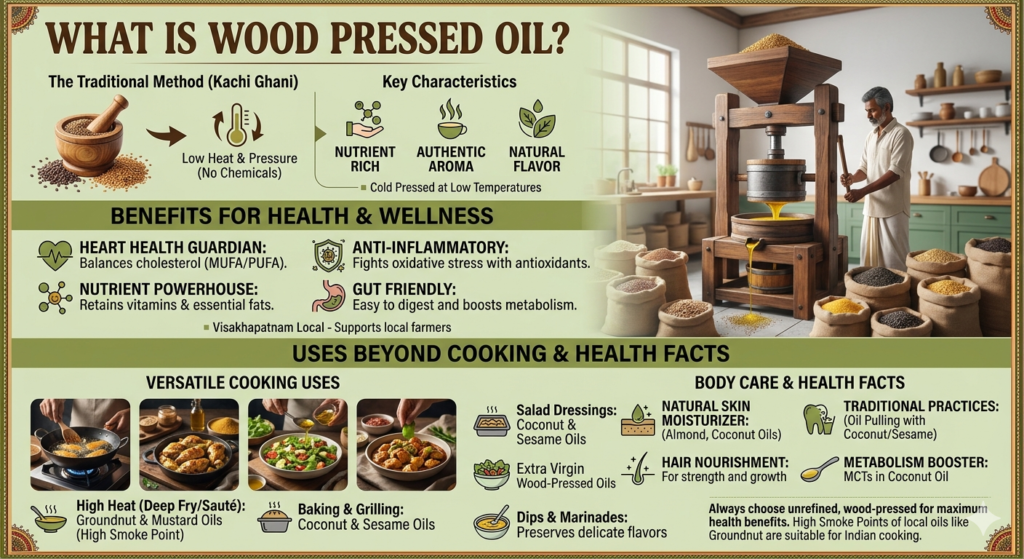
In a world flooded with refined, bleached, and chemically processed cooking oils, wood pressed oil stands apart as a time-tested method of oil extraction that dates back thousands of years in Indian culture. Whether you call it chekku ennai in Tamil Nadu or kolhu ka tel in North India, the process and the benefits are the same: slow, cold extraction that preserves everything good about the seed.
In this comprehensive guide, we’ll explore exactly what wood pressed oil is, how it’s made, its science-backed health benefits, and why nutritionists and home cooks across India are switching back to it.
What Does “Wood Pressed” Mean?
The term wood pressed refers to the traditional oil extraction method using a wooden chekku or ghani — a large wooden mortar and pestle system typically powered by a bullock or motor. Oil seeds like coconut, sesame, groundnut, or mustard are fed into the wooden vessel, and the rotating wooden pestle slowly crushes and squeezes the oil out of the seeds.
Critically, this process is slow and friction-free. The temperature during extraction stays below 40–45°C, which is why wood pressed oils are often categorised alongside cold pressed oils. This low heat is the key to why wood pressed oil retains vitamins, antioxidants, and natural fatty acid profiles that high-heat industrial extraction destroys.
Did you know? Industrial refined oils are extracted using hexane (a petroleum-derived solvent), then subjected to temperatures above 200°C for bleaching and deodorising. This process strips away naturally occurring vitamins, antioxidants, and healthy fats — leaving behind an oil that is nutritionally hollow.
Wood Pressed Oil vs Cold Pressed Oil — What’s the Difference?
This is one of the most common questions people ask, and the answer is simpler than most think. Both wood pressed and cold pressed oils are extracted without the use of external heat. The primary difference lies in the method and equipment:
In essence, wood pressed oils are a subset of cold pressed oils — they share the same philosophy of no heat, no chemicals, and maximum nutrient retention. The wooden chekku is simply the most traditional and culturally rooted form of this process.
Health Benefits of Wood Pressed Oil
The growing body of nutritional research backs what Indian grandmothers have known for generations: oils extracted through traditional methods are far better for our bodies than their modern, processed counterparts. Here are the key health benefits of wood pressed oil:
????
Heart-Healthy Fats
Wood pressed oils retain natural omega-3 and omega-6 fatty acids in the right ratio, supporting cardiovascular health and reducing inflammation.
????
Rich in Antioxidants
Vitamin E, polyphenols, and phytosterols are preserved intact — powerful antioxidants that protect cells from free radical damage.
????
Better Digestion
Unrefined oils are easier on the digestive system and support the absorption of fat-soluble vitamins A, D, E, and K.
✨
Skin & Hair Nourishment
Applied topically or consumed daily, wood pressed oils deeply nourish skin and strengthen hair due to their intact nutrient profiles.
????
No Harmful Trans Fats
High-heat refining creates trans fats linked to chronic disease. Wood pressing at low temperatures produces zero trans fats.
????
Chemical-Free
No hexane, no bleaching agents, no deodorisers — just pure oil from seed to bottle, with nothing added or removed.
Types of Wood Pressed Oils and Their Uses
Different seeds yield different oils with unique flavour profiles, smoke points, and health benefits. Here are the most popular wood pressed oils available and their best uses:
-
Wood Pressed Coconut Oil — The king of traditional cooking in South India. Rich in lauric acid and MCTs, ideal for cooking, hair oiling, and skin moisturising. Retains a natural coconut aroma that refined coconut oil lacks entirely.
-
Wood Pressed Sesame Oil (Gingelly Oil) — A cornerstone of South Indian cuisine and Ayurveda. Packed with sesamol and sesamin antioxidants, excellent for deep frying, tempering, and massage therapy.
-
Wood Pressed Groundnut Oil — The most widely used cooking oil in India. High smoke point, rich nutty flavour, and an excellent source of monounsaturated fats. Perfect for everyday Indian cooking.
-
Wood Pressed Mustard Oil — Popular in North and East India for its sharp, pungent flavour. High in erucic acid and glucosinolates, it has natural antimicrobial properties and is ideal for pickles and tadka.
-
Wood Pressed Safflower Oil — Light in flavour and rich in Vitamin E. A good everyday cooking oil for those who prefer a neutral taste, with a higher polyunsaturated fat content.
-
Wood Pressed Castor Oil — Not for cooking, but a powerhouse for hair growth and skin care. Rich in ricinoleic acid, it stimulates scalp circulation and deeply conditions hair.
???? Explore our full range of traditionally extracted wood pressed oils — cold-pressed from the finest seeds, delivered fresh to your doorstep.
Is Wood Pressed Oil Good for Cooking?
A common concern people have is whether wood pressed oils are suitable for Indian cooking, which often involves high-heat frying and tempering. The answer is yes — with some nuance.
Each wood pressed oil has its own smoke point, and you should choose accordingly:
-
Wood pressed groundnut oil: Smoke point ~160–180°C — excellent for deep frying and sautéing.
-
Wood pressed sesame oil: Smoke point ~175°C — great for stir-frying and tadka.
-
Wood pressed mustard oil: Smoke point ~250°C — one of the most heat-stable traditional oils.
-
Wood pressed coconut oil: Smoke point ~170–180°C — ideal for South Indian curries, chutneys, and baking.
For everyday Indian cooking — curries, tadka, stir-fries, and rotis — wood pressed oils perform beautifully. For very high-heat deep frying, opt for mustard or groundnut wood pressed variants.
How to Identify Genuine Wood Pressed Oil
As demand for wood pressed oils has grown, so has the market for mislabelled products. Here’s how to identify the real thing:
Check for these signs of authentic wood pressed oil:
✅ Natural sediment or slight cloudiness (especially in coconut oil)
✅ Strong, authentic aroma — sesame should smell nutty, coconut should smell like fresh coconut
✅ Shorter shelf life of 6–12 months (no artificial preservatives)
✅ Slightly darker colour compared to refined versions
✅ Labelled as “cold pressed,” “chekku oil,” “kachi ghani,” or “wood pressed”
✅ No added preservatives, artificial colours, or flavouring agents
Frequently Asked Questions
What is wood pressed oil meaning?
Wood pressed oil refers to oil that has been extracted from seeds using a traditional wooden press (chekku or ghani) without applying external heat. This method preserves the oil’s natural nutrients, antioxidants, and flavour, making it nutritionally superior to refined oils.
Is wood pressed oil the same as cold pressed oil?
They are very similar. Both are extracted without high heat and preserve natural nutrients. Wood pressed oil specifically refers to extraction using a wooden device, while cold pressed is a broader category that may include steel expeller presses. Both are far superior to refined oils.
Which wood pressed oil is best for cooking?
For everyday Indian cooking, wood pressed groundnut oil and sesame oil are excellent choices. For South Indian recipes, wood pressed coconut oil is traditional and ideal. For North Indian cooking and pickles, wood pressed mustard oil (kachi ghani) is preferred.
Is wood pressed oil good for health?
Yes. Wood pressed oils retain natural omega fatty acids, antioxidants like Vitamin E, and no chemical residues. They contain zero trans fats and support heart health, better digestion, and overall well-being when consumed as part of a balanced diet.
Where can I buy wood pressed oil near me?
You can purchase authentic, traditionally made wood pressed oils from our online store and get them delivered across India. We source directly from traditional chekku units to ensure purity and authenticity.
Conclusion: Time to Go Back to Basics
The modern food industry has spent decades convincing us that refined, processed oils are healthier and more convenient. But the evidence — and traditional wisdom — tells a different story. Wood pressed oil is not a trend. It’s a return to the way our ancestors ate: clean, unprocessed, and deeply nourishing.
Whether you’re switching for health reasons, flavour, or simply to reduce your chemical exposure, making the move to wood pressed oils is one of the most impactful changes you can make in your kitchen. Start with the oil you use most — whether that’s coconut, sesame, mustard, or groundnut — and experience the difference that genuine, traditional extraction makes.
???? Ready to make the switch? Browse our complete collection of authentic, traditionally extracted wood pressed oils — sourced, pressed, and delivered with care.